
If you live in the Phoenix area, you've probably seen it: white crust on your faucets, spots on your dishes, a showerhead that clogs every few months. Maybe your tap water tastes like a swimming pool. Arizona's water is known for being hard, and many homeowners eventually start shopping for a home water filtration system.
The options can be confusing: filters, softeners, reverse osmosis, whole-house systems, under-sink units. This guide explains how each type works, what problems it solves, and how to choose the right one for your home.
Why Arizona water causes problems
Much of the Valley's water comes from the Colorado River and local groundwater. On its way to your tap, it picks up dissolved minerals, mainly calcium and magnesium. That's what makes water "hard."
Hard water is generally safe to drink, but it's tough on your home:
- Scale builds up inside water heaters, reducing efficiency and lifespan
- Faucets, showerheads and glass doors get crusty white deposits
- Dishwashers and washing machines work harder and wear out sooner
- Soap and shampoo don't lather well, and skin can feel dry
Cities also treat water with chlorine or chloramine to keep it safe. That's important for public health, but some people dislike the taste and smell.
Start with a water test
Before you buy anything, find out what's actually in your water. Read your city's annual water quality report (often called a Consumer Confidence Report), use an at-home test kit for hardness, chlorine and pH, or have a water treatment professional test it for you. If you're on a private well, testing matters even more, since well water isn't treated by a city.
The main types of home water filtration systems
Water softeners
A softener isn't technically a filter. It swaps hardness minerals for sodium or potassium through a process called ion exchange. It's the most direct fix for scale, spots and appliance wear. Softeners need salt refills and occasional maintenance. Salt-free conditioners are an alternative that reduce scale buildup without removing the minerals.
Whole-house carbon filters
Installed where water enters your home, these use activated carbon to reduce chlorine, chloramine, odors and some chemicals at every tap. Many homeowners pair one with a softener for complete coverage.
Reverse osmosis (RO) systems
Usually installed under the kitchen sink, RO pushes water through a fine membrane that removes a wide range of dissolved solids, including many contaminants a carbon filter misses. It produces great-tasting drinking water. RO systems send some water down the drain as part of the process, and membranes and filters need regular replacement.
Under-sink and countertop filters
These smaller carbon-based units improve taste and odor at one faucet. They're affordable and easy to install, but they don't protect your plumbing or appliances.
Pitcher and faucet-mount filters
The simplest option. Good for taste, but they treat small amounts of water and need frequent cartridge changes.
Quick comparison
| System | Best for | Coverage | Upfront cost | Upkeep |
|---|---|---|---|---|
| Water softener | Hard water, scale, appliance protection | Whole house | Moderate to high | Salt refills, periodic service |
| Whole-house carbon filter | Chlorine taste and smell | Whole house | Moderate | Media or cartridge changes |
| Reverse osmosis | Best drinking water | One faucet | Moderate | Filter and membrane changes |
| Under-sink filter | Better taste | One faucet | Low | Cartridge changes |
| Pitcher filter | Taste on a budget | A pitcher at a time | Very low | Frequent cartridge changes |
Many Arizona homes use a combination: a softener (or softener plus whole-house carbon filter) for the plumbing, and an RO system at the kitchen sink for drinking water.
How to choose the right system
- What problem am I solving? Scale and spots point to a softener. Taste and smell point to carbon. Drinking water quality points to RO.
- Whole-house or point-of-use? Whole-house protects pipes and appliances. Point-of-use costs less and targets drinking water.
- How much maintenance will I really do? Every system needs upkeep. A system with overdue filters can perform worse than no system at all.
- Do I need professional installation? Whole-house systems and softeners usually require plumbing work. RO and under-sink units can be DIY for handy homeowners.
Don't skip maintenance
The most common problem with home water filtration isn't the equipment. It's forgotten maintenance. Mark your calendar for filter changes, salt refills and annual check-ups, or sign up for a maintenance plan with a local water treatment company so they track it for you.
For water treatment and plumbing companies
If you install and service water filtration systems, maintenance is where long-term customer value lives. Every softener, RO unit and whole-house filter you install needs filter changes and service visits for years.
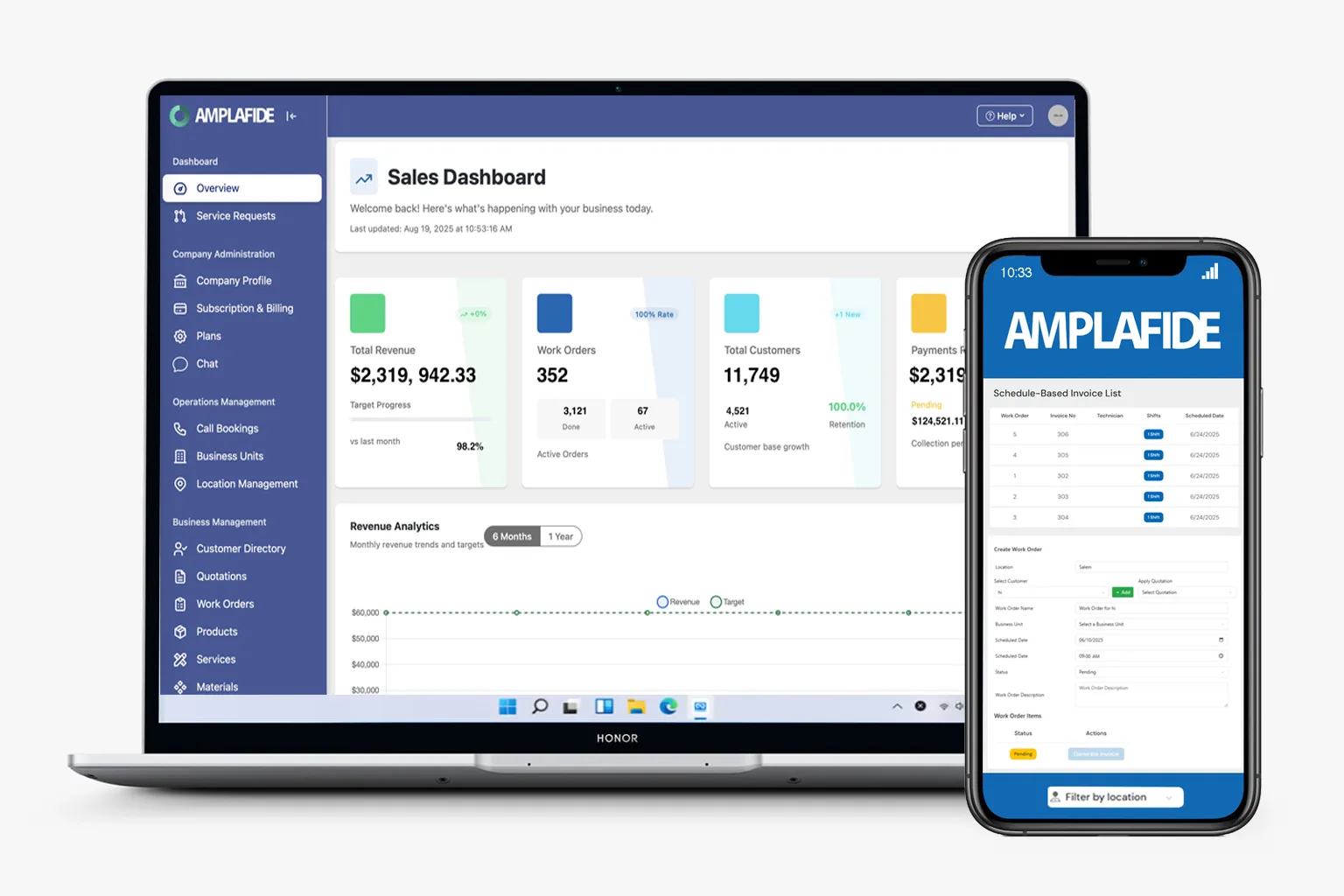
Amplafide's water treatment software helps you turn those installs into recurring revenue. Set up service agreements with recurring visits and autopay billing, send automatic reminders, and keep every system's install date and service history on the customer record. Plumbers can learn more about our plumbing software.
Frequently asked questions
Is Arizona tap water hard?
Yes. Much of Arizona, including the Phoenix area, has hard water with high levels of calcium and magnesium, which causes scale on fixtures and appliances.
What is the best water filtration system for hard water?
A water softener is the most direct fix for hard water. Many homes pair it with a reverse osmosis system at the kitchen sink for drinking water.
How often do water filters need to be changed?
It depends on the system and your water use. Follow the manufacturer schedule for cartridges and membranes, and refill softener salt as needed.
See how Amplafide can help
Run your water treatment or plumbing business on Amplafide. Flat pricing for your whole team, starting at $150/mo for up to 5 users, month to month with no contracts. New customers get their first 30 days free.