For a home service company, the phone is still the front door. When an AC dies in July or a pipe bursts at midnight, customers don't fill out a form. They call, and they call the next company on the list if nobody picks up.
That's why call handling matters so much in the trades. A missed call isn't just a missed conversation. It's a missed job, and often a missed lifetime customer. Artificial intelligence is changing how those calls get handled, not by replacing your CSRs, but by helping them answer more calls, book more jobs and spend less time on busywork.
The problem: calls come in waves
Home service call volume is anything but steady. The first heat wave of summer, the first cold snap of winter or a monsoon storm can flood the phones in an hour. Then it goes quiet.
Staffing for the peaks means paying people to wait during the lulls. Staffing for the average means calls roll to voicemail when it matters most. AI helps close that gap.
6 ways AI is improving call centers
1. Answering every call, 24/7
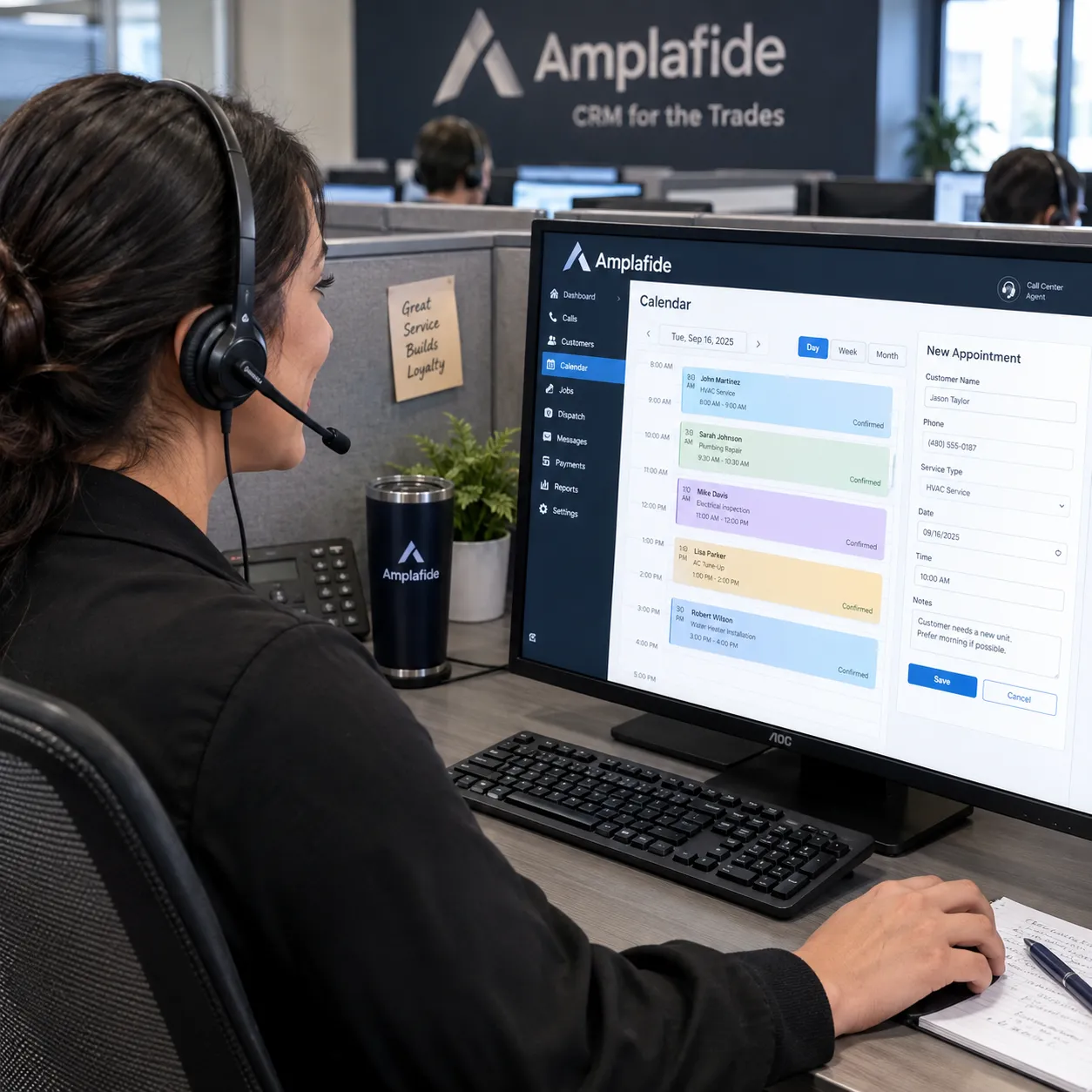
An AI answering service can pick up after hours, on weekends and during overflow. It greets the caller, collects the basics (name, address, issue, urgency) and either books the job or flags it for a callback. The customer gets a response instead of a voicemail box.
2. Smarter call routing
AI can tell why someone is calling from what they say in the first few seconds. An emergency goes to the on-call team, a billing question goes to the office, and a maintenance plan renewal goes to the person who sells them. Callers repeat themselves less, and calls resolve faster.
3. Real-time help for CSRs
During a live call, AI tools can surface the customer's history, suggest the next question to ask, or prompt a CSR to offer a maintenance plan when the caller qualifies. Newer reps sound like veterans, and veterans stop hunting through screens.
4. Automatic call notes and summaries
Instead of typing notes while trying to listen, CSRs can let AI transcribe and summarize the call. The summary lands on the job, so the tech knows what's going on before they arrive.
5. Coaching from every call
Managers can't listen to every recording. AI can review calls and flag patterns: which calls ended without a booking, where customers raised price concerns, and which reps convert best. Call recordings become a training tool.
6. Faster follow-up
AI can text a caller right after a missed call, confirm appointments, send day-before reminders and follow up on open quotes. Each small touch keeps jobs from slipping through the cracks.
What AI can't do (yet)
AI works best as support for your team, not a replacement for it. A few things still need a person:
- Upset or emotional customers. Someone with water pouring through the ceiling wants a calm, real voice.
- Complex diagnostics. Deciding between a repair and a replacement takes trade knowledge.
- High-value sales conversations. Replacement systems and big projects are built on trust.
The best setups let AI handle the routine work so your people can focus on the calls that need them.
AI is only as good as your data
This is the part many companies miss. An AI assistant can't book a job if it can't see your schedule. It can't recognize a returning customer if their history lives in a filing cabinet. It can't offer a maintenance plan if nobody tracks who has one.
Before you add AI to your phones, make sure one system holds every customer and their service history, a live schedule with tech availability, and open quotes, invoices and service agreements. That's the job of a field service CRM, and it's the foundation every call center tool depends on.
How to get started
- Measure your missed calls. Count how many calls go unanswered each week, especially after hours. That number is your opportunity.
- Get your customer data in one place. Move off spreadsheets and paper into a CRM your whole team uses.
- Start with one use case. After-hours answering or missed-call text-back are easy first wins.
- Track bookings, not just calls. The goal is booked jobs. Measure that before and after.
- Keep people in the loop. Review AI-handled calls each week and adjust.
AI and your CRM, working together
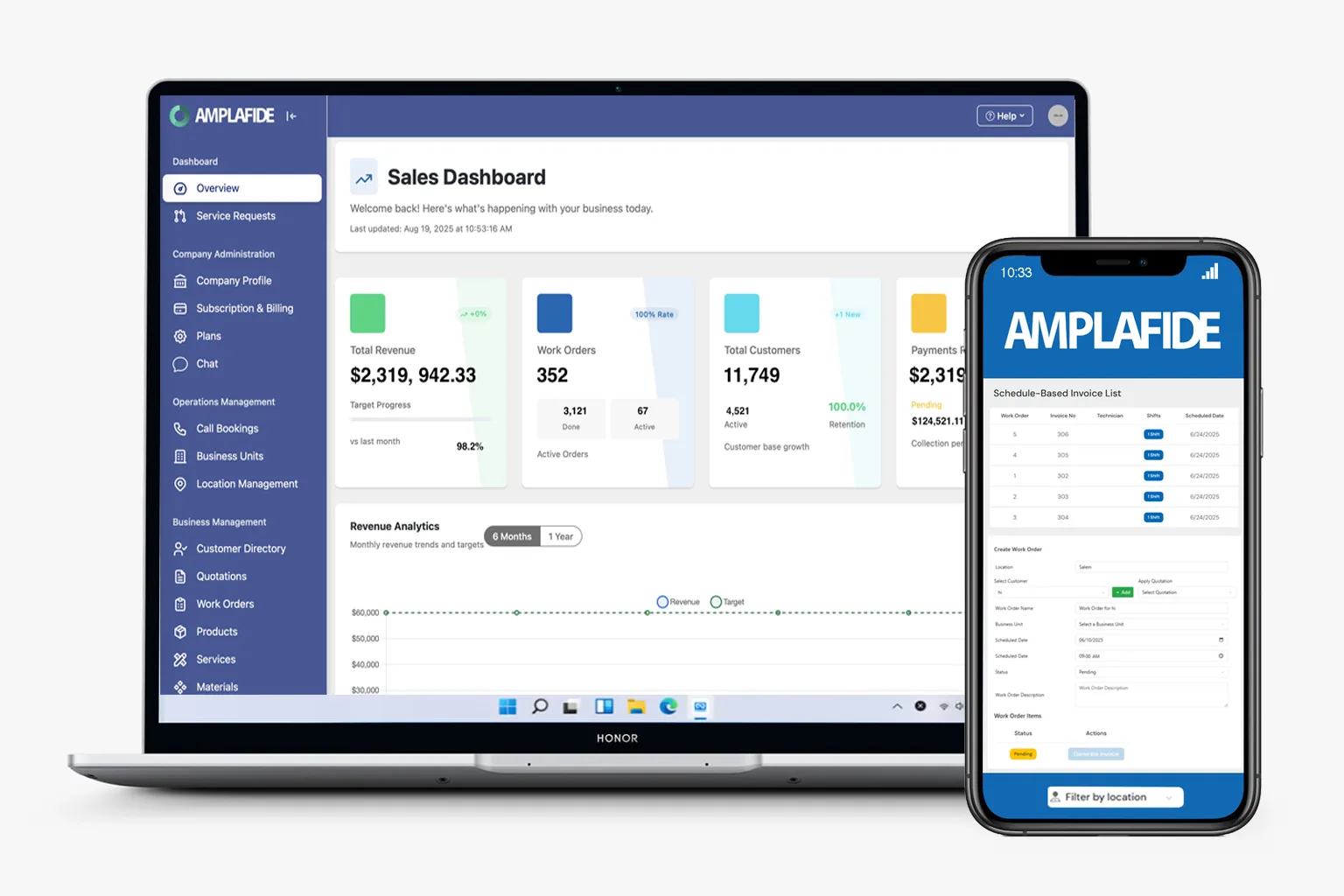
Amplafide gives home service companies both pieces: the system of record that holds customers, schedules, quotes, invoices and service agreements, and an AI answering service that answers calls day or night, books jobs, qualifies leads and routes urgent calls. Learn more about call booking and our AI agents.
Frequently asked questions
Will AI replace my customer service reps?
No. AI works best handling routine calls, after-hours answering and follow-up, so your CSRs can focus on upset customers, complex problems and high-value sales.
What is the easiest way to start using AI for calls?
Start with after-hours answering or missed-call text-back. Both are simple to set up and show results in booked jobs quickly.
Does AI need a CRM to work well?
Yes. AI tools need access to your schedule, customer history and open work to book jobs and recognize returning customers.
See how Amplafide can help
Answer every call and book more jobs with Amplafide. Flat pricing for your whole team, starting at $150/mo for up to 5 users, month to month with no contracts. New customers get their first 30 days free.